Roof Inspection and Repair in San Jose: Brookwood Avenue Presale Case Study
When a home changes hands, the condition of the roof is one of the first questions a buyer wants answered. This presale roof inspection on Brookwood Avenue in San Jose shows how a clear, honest evaluation protects everyone at the table. Coordinated with Intero Real Estate, the project gave both buyer and seller a written account of the roof’s condition and the repairs needed to keep it watertight.
The owner indicated that the composition shingle roof had no active leaks, but it carried several deficiencies worth correcting before the sale closed. As a Licensed C-39 Roofing and General Contractor in business since 1979, Eastman Roofing & Waterproofing is trained to diagnose and remedy 80% of the roofing system that you don’t see — and to say so plainly when work is needed.
Here is how the roof inspection and repair came together in a single seven-hour visit.
Project Details
- Location: Brookwood Ave., San Jose, CA 95116
- Property Type: Residential
- Project Date: April 14, 2026
- Products Used: Wil-Mar pipe jack collars, M-1 sealant, elastomeric sealant, composition shingles, fasteners
- Project Cost: $2,250
- Completion Time: 7 hours
The Project Challenge
The inspection was part of a pre-sale real estate transaction, with one goal: to judge the condition of the existing composition shingle system before the property transferred. No active leaks were present, yet the roof showed several issues that put its watertight integrity at risk.
Wear From Sun Exposure and Limited Ventilation
Mineral surface loss and fine cracking showed up in the shingles on the sun-exposed south side of the roof. Limited attic ventilation added to the wear. These conditions sit outside standard warranty coverage.
Moss had also formed on the shaded, north-facing first-story slope. That is a cosmetic issue that does not affect the roof’s structure. Power washing was not advised, since the pressure can damage the shingles.
Specific Repair Items Found
Beyond the broader wear, the inspection turned up a focused list of roof repairs:
- Debris behind the chimney, with wood trim set too close to the roof to allow water flow at the cricket, plus dry rot starting in that trim
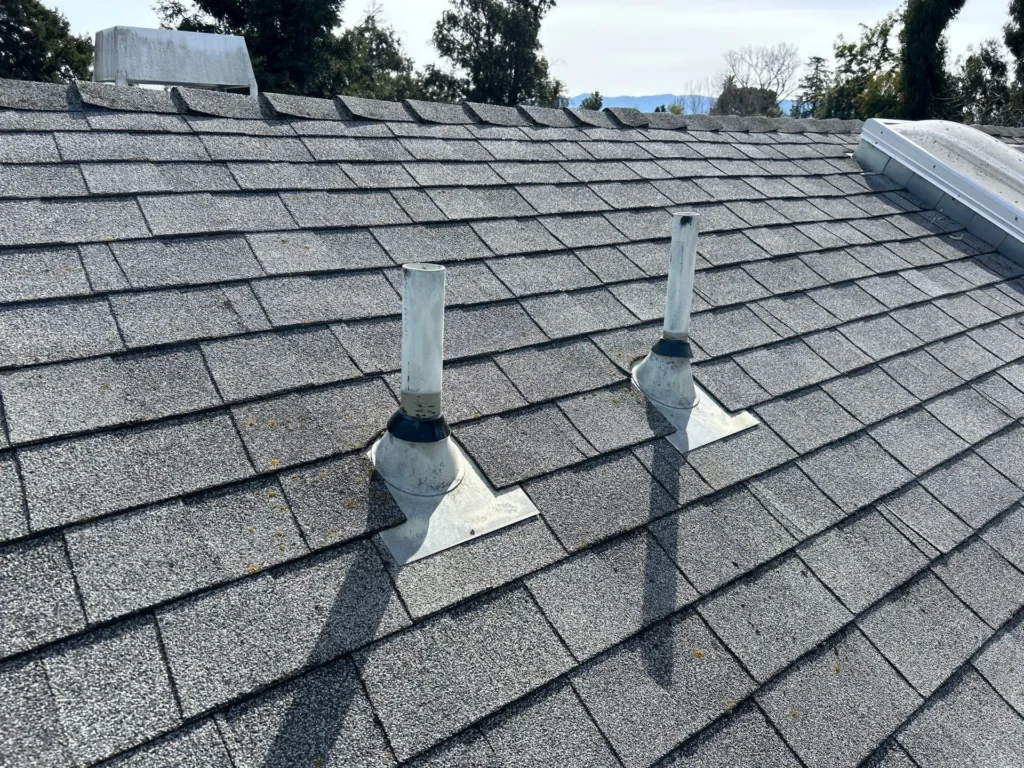
- Deteriorated sealant and tape on five pipe jacks, and one unsealed vent collar
- A failed gutter seal at the right front porch that let moisture reach the wood beneath
- A loose roof-to-wall metal intersection that damaged two shingles
- Debris at skylights and chimneys
Our Solution
Eastman built a repair plan around the exact deficiencies found, giving buyer and seller clear, usable information during the transaction. Every item had to be completed before the roof could be called watertight.
Behind the chimney, our crew removed the accumulated debris and cut the wood trim back about two inches from the roof surface. That restored proper water flow at the cricket and stopped the dry rot from spreading. The homeowner was advised to keep the roof clear of debris going forward, since debris-related leaks fall outside warranty coverage.
At the pipe flashings, deteriorated sealant and tape on all ten pipe jacks were replaced with new Wil-Mar collars — five at 1½” and five at 2″ — restoring a proper seal at each penetration. The separate unsealed collar was treated with elastomeric sealant to close off any path for water.
At the right front porch, the failed gutter joint that had let moisture reach the wood was repaired, then cleaned and resealed with M-1 or a comparable sealant. The two shingles damaged by the loose roof-to-wall intersection were replaced, and the metal was re-anchored to restore a sealed transition between the roof and the wall. Finally, the shingles around the skylights and chimney were trimmed back to open proper water channels at each penetration — a correction to the original installation.
Together, these repairs brought the roof to a watertight condition and gave everyone in the transaction confidence in the home.
Process
The inspection started with a thorough visual review of the entire roof system — not just the shingle field, but every penetration, transition, and edge. We measured the pitch with digital tools and confirmed a 3/12 slope, which guided the underlayment approach. Lifting the bottom course of shingles lets us verify the actual underlayment on the roof.
On the surface, our inspectors walked the roof in systematic patterns to check the shingles across every exposure. The north-facing slope drew extra attention because of the moss, and its coverage was documented. Each plumbing vent penetration was assessed on its own.

At the roof-to-wall intersection that showed shingle damage, we traced the flashing installation to learn whether the original crew followed proper sequencing or cut corners that led to early failure.

Every finding was photographed and written into a detailed report that explained each deficiency in plain terms. Where a specific term was needed — like “pipe jack collar” or “anchor metal” — we added a short note on what it does and why it matters. The report sorted the repairs into clear categories, so readers could see which items addressed immediate concerns and which prevented future problems. When the work was finished, photos of the completed repairs were provided. The written findings and pricing stayed valid for 90 days, giving the parties enough time to complete the sale.
Results & Benefits
The inspection gave both sides of the transaction complete, accurate information about the roof and the cost to address it. Instead of surprises during a final walkthrough — or after closing — the buyer received professional documentation of exactly what the roof needed. That kind of clarity prevents the common letdown of discovering roofing costs right after moving in.
For the seller, the report carried credibility that a self-assessment cannot match. When the talks turned to the roof, the seller could point to a professional third-party evaluation rather than opinions or rough estimates. Itemized repair costs gave concrete numbers for credits or price adjustments, keeping the conversation grounded in facts.
With every repair done, the roof was confirmed watertight and ready for transfer. With proper care, it was projected to last another 6 to 8 years on the sun-exposed left side — where limited attic ventilation speeds wear — and 10 or more years on the other slopes. All work carries a one-year warranty, with leaks traced to inadequate underlayment falling outside that coverage, a limit shared openly with everyone from the start.
Documenting the ventilation-related wear also gave the buyer room to request attic ventilation improvements as part of the deal. Better ventilation extends roof life and lowers cooling costs, so the buyer could ask for both the immediate repairs and the upgrades that protect the roof long-term.
Naming exact materials — Wil-Mar collars and M-1 sealant — set a quality standard that a vague “contractor to repair roof” note never could. That detail protected the buyer from low-grade substitutes that fail within a year or two and need redoing.
Project Gallery


Key Specifications
- Roof pitch: 3/12 at second story, left side and front porch
- Roofing material: Composition shingle
- Underlayment: 2 plies of felt at 3/12 pitch
- Ventilation: Insufficient, contributing to shingle wear on the sun-exposed slope
Highlights
- Pre-sale roof inspection coordinated with real estate professionals
- Documented shingle wear from sun exposure and limited attic ventilation
- Detailed repair scope with transparent, itemized pricing
- 90-day validity period on the inspection findings and pricing
- Repairs completed in a single seven-hour visit
Materials Used
- Wil-Mar pipe jack collars (five 1½” diameter, five 2″ diameter)
- M-1 sealant or a comparable product for the gutter joint
- Elastomeric sealant for the vent collar
- Composition shingles (2 replacement units)
- Anchor metal for the roof-to-wall intersection repair
Planning a Pre-Sale Roof Inspection in San Jose?
Whether you are buying, selling, or just want to know where your roof stands, Eastman takes the uncertainty out of the decision with a thorough assessment first and honest options second. We are a Licensed C-39 Roofing and General Contractor, the Roofer of Choice for the Silicon Valley since 1979, serving San Jose and the surrounding South Bay.
Contact Eastman Roofing & Waterproofing to schedule your free roof inspection and written estimate.